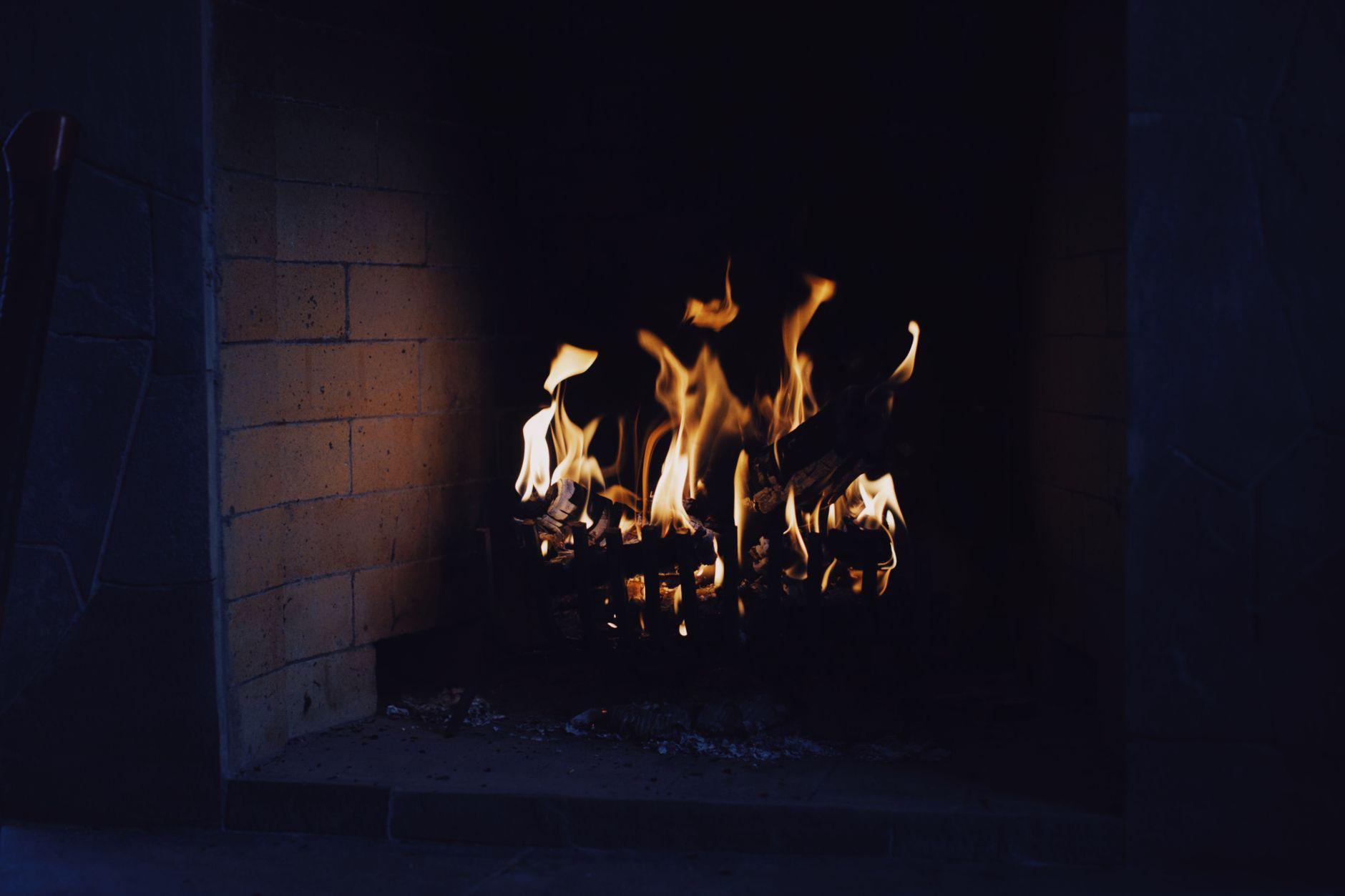
Some chimney fires roar like a freight train and bring the neighbors out. Many are quieter: a few minutes of rushing noise, a smell of hot tar, and the next morning nothing but some curled black flakes on the hearth, the roof or the patio. Either kind can crack the clay tile inside the flue, and the cracks rarely show from the room. This post covers what we look for after a fire in the flue, how the camera decides between repair and a new liner, and what goes into the written figure for relining in Los Angeles.
Signs a fire happened
People often learn about a chimney fire after the fact. These are the clues we ask about:
- puffy, crusted buildup in the flue that looks like burnt honeycomb
- black flakes or chunks on the roof, in the gutters or in the yard below the chimney
- a cap or a damper that has warped or changed color
- a crown or tile top with fresh cracks
- a tar or burnt smell that stays in the room for days
- a sudden roar or a crackling sound in the chimney during a fire
If any of these sound familiar, the fireplace should stay unlit until the flue has been seen.
Why the room does not show it
A flue fire burns at temperatures far above anything a normal fire reaches. Clay tile expands with the heat and cracks, joints open, and pieces can fall away. All of it happens behind the brick, out of sight from the firebox. A look up with a light reaches only the bottom few feet.
That is why the inspection after a fire is a Level 2. For $375, we run a camera through the full flue, look at the chimney where it passes through the attic, and check the top. The camera frames are what every decision afterward rests on. Our Level 2 page covers the visit.
The ember side of a flue fire
Our work starts from embers, and a flue fire is an ember event. Burning pieces leave the top of the chimney and land wherever the wind takes them. A cap with a sound screen catches most of them. A missing screen, or one that rusted open, lets them out onto the roof. After a fire we check the cap and its screen, the roof around the chimney and the gutters below, because a fire that ended in the flue can have left something smoldering outside.
Inside, a cracked flue lets heat reach the wood framing a few inches beyond the brick. The next fire through that flue is the risky one, which is why we mark it "stop using" until it is repaired.
What the camera decides
The frames sort a damaged flue into one of three paths:
- Repair in place. One or two small cracks in otherwise sound tile can be sealed with a heat-rated coating or the inside resurfaced.
- Reline. Cracks along many tiles, open joints or missing pieces mean the old tile can no longer hold the fire. A new liner runs the full height inside the old flue.
- Rebuild the top. If the fire also cracked the crown or loosened brick above the roof, that part is rebuilt along with the liner work.
Once you have the frames, put the inspection findings in the form at the top of this page, or tell us there that you still need the camera visit, and we will write up the repair path that fits.
What goes into a relining figure
We do not publish a relining price, because no two flues are alike. The written figure from us lists each of these:
- The liner itself. Stainless steel for wood fires, chosen for heat and acid. A gas appliance can take a different liner sized to it.
- The length. Measured from the firebox to the top. A two-story chimney needs twice the liner of a one-story.
- The flue shape. A round liner in a rectangular flue is the usual fit. If the old flue is too tight, it may need opening up first.
- Insulation. Some flues need it to keep the outside of the liner within safe limits next to framing.
- The top. A plate that closes the gap around the liner, and a screened cap on top of it.
- Access. Roof pitch, tile and the height of the stack.
Each line is written out, so you can see where the money goes.
Insurance and records
If you plan to make a claim for the fire, the camera frames and the dated report are the record an adjuster will ask to see. Whether the policy pays is between you and your insurer. We write the report so it reads plainly to someone who has never stood on a roof.
Before the next fire
A relined flue, a sound crown and a screened cap put the chimney back in shape for the season. We follow up with a yearly sweep and inspection, because the habit that caused the fire, usually heavy buildup, is the one to break. Burn dry, seasoned wood, and keep the cap screen clear.
We reline flues across Los Angeles and in Alhambra, Maywood and Temple City. Our liner page covers liner types.
Short answers
Can I use the fireplace once the fire is out? Not until the flue has been seen. A cracked flue can let the next fire reach the framing.
Does a gas fireplace need relining after a flue fire? Gas flues rarely burn, but if the house once burned wood in the same flue, the old buildup can. The camera tells us.
Will a liner fix a draft problem? Often, yes, since a liner sized to the fireplace draws better than a cracked oversized flue.
Next step
After a fire in the flue, the order is simple: keep the fireplace dark, get the camera through it, then decide. Use our contact page to start with the inspection.
Get Your Screen and Flue Checked Before the Wind
Dalrymple Chimney Experts sweeps flues, fits spark arrestor caps and inspects chimneys from our Los Angeles base, with regular visits in Alhambra, Maywood and Temple City. Each report puts fire-risk items first.